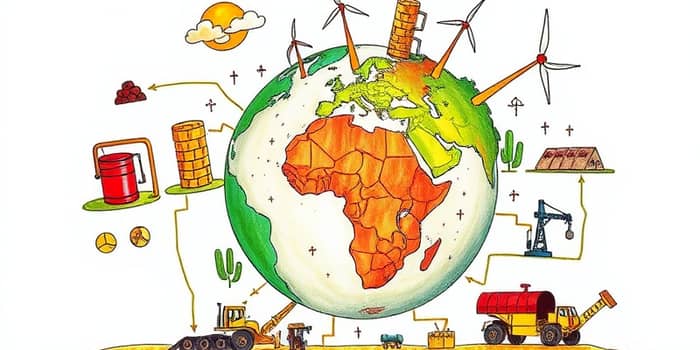
Commodity markets are the lifeblood of global trade, influencing every aspect of our daily lives.
In late 2025, prices sit at six-year lows, while geopolitical tensions and sustainability imperatives reshape supply and demand.
The Backbone of Economic Growth
From the oil that fuels transportation to the metals that build skyscrapers, commodities underpin every stage of production in modern economies.
Governments and corporations monitor price fluctuations closely, as even modest shifts can ripple through inflation rates, consumer prices, and national budgets.
Understanding this foundation empowers stakeholders to anticipate challenges and seize emerging opportunities.
Navigating Price Volatility and Market Forces
Since 2020, commodity price volatility has soared to levels not seen in half a century. Markets plunged roughly 12% in 2025, with another 5% contraction expected in 2026.
Volatile price swings across commodities stem from a complex interplay of factors:
- Weakening global growth projections and tepid demand.
- Abundant supply in key sectors such as steel and grains.
- Geopolitical conflicts disrupting trade routes and production.
- Tariffs and policy shifts affecting cross-border flows.
Table: Key Commodity Price Projections for 2025
Energy: Powering the World and Facing Transition
Oil demand remains subdued, especially in China, where industrial output has slowed. Advanced economies see structural declines due to the energy transition reshaping demand patterns.
Natural gas markets are equally unsettled. Europe braces for supply gaps as pipeline deals lapse, boosting LNG imports from the US Gulf Coast.
Coal demand shows no sharp rebound, with environmental policies and renewable alternatives steadily eroding coal’s role.
Metals: Building Infrastructure and Fueling Innovation
Steel markets face persistent oversupply, driven by Chinese export surges and global manufacturing weakness.
Industrial metals such as copper and nickel remain under pressure but could see recovery if interest rate cuts spur capital expenditures by late 2025.
Precious metals, led by gold, outperform peers thanks to safe-haven flows and robust central bank purchases.
Agriculture: Nourishing the Global Population
Record soybean and maize harvests in Brazil have swelled global stocks, weighing on prices. Wheat stocks are moderately tighter but lack dramatic shifts.
Rice markets responded positively to eased Indian export restrictions, yet soft commodity volatility endures due to weather uncertainties.
Fertilizer price stability may provide a price floor, but farmers remain cautious amid input cost pressures.
Critical Minerals: The Green Transition’s Building Blocks
Demand for lithium, cobalt, and other battery metals continues to outpace traditional commodities, driven by the surge in electric vehicles.
Mining projects in Africa and South America expand to meet this need, but stakeholders must balance growth with critical role for sustainable sourcing and community impact.
Geopolitics and Policy: Shaping Supply and Demand
Trade tensions between the US and China have redirected flows of agricultural and metal commodities, underlining the strategic importance of supply chain resilience.
Tariffs and export restrictions create patchwork barriers, pressuring importers and exporters to diversify sources and investments.
Climate policies further influence markets. Carbon pricing and renewable mandates gradually shift demand away from fossil fuels.
Harnessing Innovation: Technology and Sustainability
Advances in digital trading platforms and blockchain improve transparency in commodity transactions, reducing fraud and streamlining logistics.
Precision agriculture technologies, such as drone monitoring and variable-rate fertilization, boost yields while lowering environmental footprints.
In mining, automation and remote operations enhance safety and efficiency, contributing to more resilient supply chains.
Risk, Resilience, and the Road Ahead
With high volatility expected to persist, market participants must adopt disciplined approaches. Hedging strategies and diversified exposure can cushion against unexpected shocks.
Building strategic reserves and securing long-term off-take agreements help mitigate supply disruptions and price spikes.
- Implement proactive risk management frameworks.
- Invest in sustainable and diversified supply chains.
- Leverage data analytics for real-time market insights.
- Foster partnerships across public and private sectors.
Ultimately, the resilience of commodity markets rests on our collective ability to navigate uncertainty with disciplined strategies and empower informed decision-making and resilience.
By embracing innovation, sustainability, and collaboration, stakeholders can transform raw material challenges into opportunities for growth, equity, and environmental stewardship.
The journey ahead may be complex, but the raw materials of the economy will continue to drive human progress and prosperity.
References
- https://www.oxfordeconomics.com/resource/five-key-commodity-trends-to-watch-for-in-2025/
- https://www.jpmorgan.com/insights/treasury/forecasting-planning/commodities-market-trends
- https://www.morganstanley.com/im/en-gb/intermediary-investor/insights/articles/commodity-outlook-2025-three-areas-to-watch.html
- https://www.spglobal.com/commodity-insights/en/news-research/topics/commodities-2025
- https://www.imf.org/en/publications/weo/issues/2025/10/14/world-economic-outlook-october-2025
- https://tradingeconomics.com/forecast/commodity