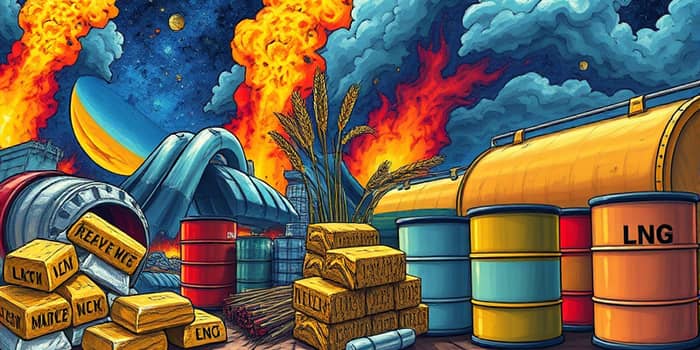
As global economies navigate uncertain waters, the commodity landscape of late 2025 presents both challenges and compelling opportunities. Investors seeking to diversify portfolios and hedge against volatility must understand the forces shaping raw materials markets.
From energy and metals to agriculture, each sector tells a unique story of supply, demand, and innovation. This article offers a comprehensive exploration of the current state, outlook, major trends, risks, and strategic considerations for commodity investors.
Market Overview for 2025
Commodity prices are under pressure, with aggregate indices projected to fall by about 12% in 2025 and an additional 5% the following year, reaching a six-year low. Highest price volatility since 1970 has characterized this decade, driven by geopolitical shocks, pandemic flare-ups, and rapid demand shifts.
Out of the 27 most liquid commodity markets, nearly 59% are forecast to average lower in 2025 than in 2024. Historical data shows that quarters with negative per capita global economic growth often coincide with a ~25% drop in commodity indices. This cyclical decline underscores the importance of aligning investment strategies with macroeconomic trends.
Energy Commodities: Navigating Surplus and Demand
The energy complex faces divergent pressures. Oil markets are grappling with surplus; J.P. Morgan forecasts Brent crude at an average of $73 per barrel, likely slipping below $70 by year-end, while WTI may average $64. An increase in OPEC+ supply amid weak demand and robust non-OPEC production keeps prices subdued.
In contrast, natural gas—particularly LNG—anticipates a boom. Post-pipeline shifts in Europe and expanding U.S. export capacity suggest a year of strong demand. Coal demand remains robust despite emissions targets, reaching record highs in 2023–2024 and persisting into 2025.
Carbon markets also draw investor attention. European Union Emissions Allowances (EUAs) are forecast to hit €95 per ton by end-2025, driven by tightening supply and speculative flows. This bullish outlook for carbon allowances highlights the growing importance of environmental regulation in shaping commodity values.
Metals: From Gold to Critical Minerals
Precious metals continue to shine as safe havens. Gold and silver have hit record levels, propelled by central bank purchases and cautious investor sentiment. Gold is forecast at $4,126/oz and silver at $51.56/oz, supported by expectations of lower U.S. interest rates and dollar pressure.
Meanwhile, critical and battery metals like copper, lithium, and aluminum attract long-term interest due to electrification and clean energy mandates. African mining projects and new capacity expansions reflect the energy transition and electrification trends that underpin growth in these minerals.
Steel markets, however, suffer from overcapacity. China’s contracting property sector has flooded global markets with cheap exports, depressing prices. Until supply is rebalanced, steel may remain under pressure despite sporadic demand improvements.
Agricultural Commodities: Supply Amid Uncertainty
Soft commodity markets show mixed signals. Soybean stocks reached 17-year highs in 2024/25, keeping prices depressed. Maize and wheat may see slight upticks, but both remain below peaks from 2021–2023. Wheat stocks, although declining, still provide comfortable supply ratios.
Rice prices are set to decline after India lifts export restrictions, while cocoa and coffee may face downward pressure as Rabobank predicts expanded production and weakening demand. Investors should monitor regulatory changes, climate impacts, and trade tensions that can rapidly alter market dynamics.
Macro Trends Shaping Commodity Markets
Several overarching forces influence commodity prices. A global economic slowdown weighs heavily on industrial and energy demand. A strong U.S. dollar makes commodities pricier for international buyers, adding downward pressure. Meanwhile, persistent inflation or supply scarcity in certain sectors can support prices when inventories run low.
Geopolitical tensions—from trade wars to the Russia-Ukraine conflict and looming U.S. elections—have proven catalysts for sudden price swings. Investors must stay vigilant, as tariff adjustments and export restrictions can reshape supply chains overnight.
Risks and Opportunities for Investors
- Risks:
- Global slowdown or renewed trade conflicts depressing demand.
- Supply shocks from OPEC+ policy shifts or extreme weather events.
- Regulatory changes, such as EU deforestation rules, affecting agricultural costs.
- Currency fluctuations altering commodity valuations.
- Opportunities:
- Hedge against turbulent market conditions with gold and precious metals.
- Invest in critical minerals tied to clean energy mandates.
- Capitalize on carbon credit markets as EUAs tighten supply.
Strategic Considerations for Long-Term Success
Building a resilient commodities portfolio requires a multifaceted approach. Diversification across direct exposure (ETFs, futures) and equities of producers can mitigate individual sector risks. Blending precious metals, critical minerals, and emerging ESG-themed assets offers balanced participation in both short-term cycles and structural trends.
Partnering with experienced traders or fund managers can provide an edge in volatile markets. Sophisticated strategies—such as structured prepayments and supply agreements—help manage working capital and reduce price risk. Recognizing when to lean into medium- to long-term value versus short-term momentum is crucial.
Commodities also serve as an inflation hedge. In periods of persistent price rises, raw materials often outpace traditional assets, preserving purchasing power and portfolio stability. Integrating them thoughtfully can enhance overall returns and reduce drawdown risk.
Key Data Points and Forecasts
In conclusion, 2025 presents a dynamic environment for commodity investors. While many markets face headwinds, structural developments—especially in clean energy and carbon regulation—offer compelling long-term opportunities. A disciplined, diversified approach, guided by rigorous analysis and professional expertise, can transform volatility into profitable outcomes. By staying informed and proactive, investors can harness the power of raw materials to enhance portfolio resilience and capture growth in an ever-evolving global economy.
References
- https://www.oxfordeconomics.com/resource/five-key-commodity-trends-to-watch-for-in-2025/
- https://internationalbanker.com/brokerage/commodities-are-likely-to-remain-under-pressure-in-2025/
- https://www.jpmorgan.com/insights/treasury/forecasting-planning/commodities-market-trends
- https://brainworksinc.com/commodities-market-experienced-traders-2025/
- https://www.citigroup.com/global/insights/commodities-market-outlook-4q-25
- https://www.morganstanley.com/im/en-gb/intermediary-investor/insights/articles/commodity-outlook-2025-three-areas-to-watch.html
- https://www.spglobal.com/commodity-insights/en/news-research/topics/commodities-2025
- https://tradingeconomics.com/forecast/commodity